
A 11 — Dangerous junction
This junction is considered dangerous, because the traffic crossing the road has an unconditional duty to give way. If there is an entry from one side only, this can be shown with a symbol.
Warning signs are put up to warn road users about hazardous conditions on the road. They are typically used in situations where the hazard is either hard for road users to anticipate, or considerably greater than what they would normally expect.
The purpose of warning signs is to attract the attention of road users and help them stay alert to potential hazards. These signs can give notice of risk factors such as sharp bends, steep hills, uneven roads, poor grip, road works, animal crossings, stretches with dangerous weather conditions and other potential risk zones.
This junction is considered dangerous, because the traffic crossing the road has an unconditional duty to give way. If there is an entry from one side only, this can be shown with a symbol.
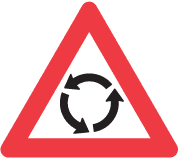
This sign indicates that there is a roundabout on the road. A roundabout is a traffic layout where roads meet in a circular shape and the traffic moves around it in one direction.
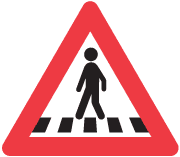
This sign marks that there is a pedestrian crossing on the road. A pedestrian crossing is an area where pedestrians have priority to cross the road. Where the sign is accompanied by a supplementary panel with the text "Pedestrian street", it indicates that the sign refers to a pedestrian crossing that crosses a pedestrian street. This means that pedestrians have special priority in the area, since it is a dedicated walking zone without cars and ordinary moving traffic.
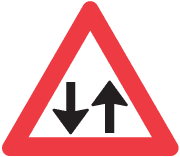
This sign indicates that there is oncoming traffic on the road. The sign can be put up at the normal distance in accordance with section 11 and can also be used at the start of a stretch of road with oncoming traffic. Where the sign is displayed, road users must be aware that they will meet vehicles travelling in the opposite direction on the road. It is important to comply with the rules for driving with oncoming traffic, such as keeping to the correct carriageway, maintaining an appropriate speed and watching out for oncoming vehicles when passing and in other driving situations. Putting up the sign informs road users that they must pay particular attention to the oncoming traffic and have regard to safety and to the flow of traffic on the road.
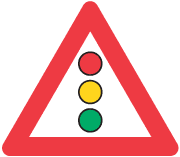
This sign indicates that there are traffic signals on the road. Traffic signals are a traffic control system that uses lights to control and direct the flow of traffic. Where the sign is displayed, it means that road users must pay attention to and comply with the instructions of the traffic signals placed on or near the road. The traffic signals use different colours (red, amber and green) to indicate when road users must stop, be alert or continue. It is important that road users understand and follow the rules for traffic signals, as they help to maintain road safety and order. By respecting the traffic signals and responding to them correctly, road users can avoid dangerous situations and contribute to an even and efficient flow of traffic.
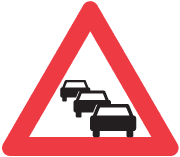
This sign indicates a particular risk of queues forming on the road. The sign tells road users that there is an increased likelihood of traffic jams or stationary queues in the area. Where the sign is displayed, road users must be aware of the possibility of traffic delays and adjust their driving accordingly. It may be necessary to reduce speed, increase the distance to the vehicle in front and be prepared for stop-and-go traffic. The purpose of the sign is to warn road users about the potential risk of traffic jams, so that they can take precautions and avoid dangerous situations. It is important to drive carefully and comply with the rules on safe distance and behaviour in queuing situations, in order to maintain road safety and contribute to a smooth flow of traffic.
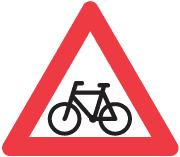
This sign indicates a particular hazard where cyclists and riders of small mopeds may ride onto or across the carriageway. Where the sign is displayed, road users must be aware of the possibility of cyclists and moped riders entering or crossing the carriageway. This can bring an increased risk of collisions or dangerous situations. The purpose of the sign is to warn road users about this particular hazard and to encourage greater attention and consideration towards cyclists and moped riders. It is important to respect cyclists' rights and to give them the room and the priority they are entitled to under the traffic rules. By paying attention and showing consideration towards cyclists and moped riders, you can help to prevent accidents and create a safer experience in traffic for all road users.
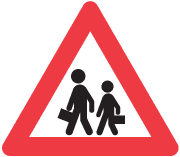
This sign indicates a particular hazard where children are on or beside the road. The sign is used to warn road users of the need for greater attention and care in areas where children are present. Where the sign is displayed, road users must pay extra attention to the children and to how they might move on the road. This may be because of school routes, playgrounds or other areas where children often spend time. There may also be a school patrol on duty, which is shown by a supplementary panel with the text "School". At places without traffic signals or a pedestrian crossing, two alternately flashing amber lights must also be placed above the warning sign. This adds further visibility and attention around the particular hazard associated with the presence of children. The purpose of the sign is to warn road users of the need for care and consideration towards children, as they can be unpredictable in their behaviour and need extra protection in traffic. By respecting the sign and taking the necessary precautions, road users can help to create a safe road experience for children and reduce the risk of accidents.
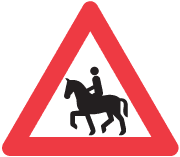
This sign indicates that there are riders (people on horseback) on the road. The sign is used to warn road users that they may come across riders and must show care and consideration towards them. Where the sign is displayed, road users must be aware of the riders and of their presence on the road. It is important to respect riders' rights and to give them appropriate room and priority in accordance with the traffic rules. The purpose of the sign is to create awareness of riders and to promote road safety by informing other road users about the particular hazard involved in meeting or passing riders on the road. By paying attention and showing consideration towards riders, you can help to prevent accidents and create a safer road experience for everyone.
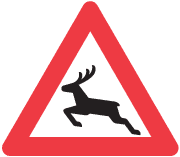
This sign indicates that there are wild animals on the road. The sign is used to warn road users that there is a risk of animals crossing the road or being close to it. The sign may show symbols representing the different types of animal that may be involved in incidents with wildlife. These symbols can vary depending on the area and on which species are most common there. Where the sign is displayed, road users must be particularly alert and prepared for possible encounters with wild animals. It can be important to reduce speed, keep an eye on the roadside and be ready to brake or take evasive action if an animal suddenly appears on the road. The purpose of the sign is to warn road users about the potential danger associated with wild animals and to encourage careful driving in order to avoid collisions with them. It is important to respect the animals and show consideration for them, in order to keep them safe and avoid unnecessary harm to both animals and people.
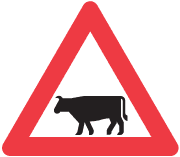
This sign indicates that there is livestock (cattle) on the road. The sign is used to warn road users that there is a risk of coming across livestock, or of the animals crossing the road. The sign may show symbols representing types of animal other than cattle that may be involved. These symbols can vary depending on the area and on which species are most common there. Where the sign is displayed, road users must be alert and take care, particularly when it comes to livestock on the road. It may be necessary to reduce speed, be prepared for how the animals behave and be ready to react if you need to take evasive action or stop. The purpose of the sign is to warn road users about the potential danger associated with cattle and other animals on the road and to encourage careful driving in order to avoid collisions with them. It is important to respect the animals and show consideration for them, in order to keep them safe and to maintain road safety for everyone involved.
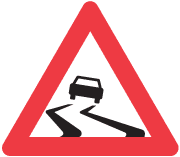
This sign indicates that the carriageway may be abnormally slippery. The sign is used to warn road users about a potentially slippery road surface that can be a hazard when driving. The sign can be accompanied by a supplementary panel stating the reason why the road surface is slippery. For example, the supplementary panel may read "Slippery when wet", indicating that the road surface is slippery because of rain or wet conditions. Where the sign is displayed, road users must be aware of the slippery road surface and adjust their driving and speed accordingly. It may be necessary to take care, brake gradually and avoid quick or sudden movements that could cause a loss of grip. The purpose of the sign is to warn road users about the potential danger associated with a slippery road and to encourage careful driving in order to avoid accidents and damage. By paying attention to the sign and adapting their driving to the conditions, road users can help to maintain safety on the road.
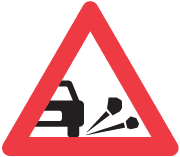
This sign indicates a particular hazard from loose stones on the road. The sign is used to warn road users about the risk of stone chips or damage to vehicles caused by the loose stones. Where the sign is displayed, road users must be aware of the possibility of loose stones on the road, which can bring a risk of stone chips to the bodywork or windscreen of the vehicle. It is important to drive carefully, keep an appropriate distance to the vehicle in front and be prepared to react if loose stones suddenly come onto the carriageway. The purpose of the sign is to warn road users about the particular hazard associated with loose stones and to encourage careful driving in order to avoid damage and accidents. It is important to respect the sign and take the necessary precautions in order to maintain safety on the road and protect vehicles from any damage caused by loose stones.
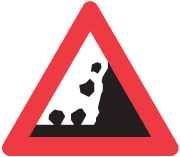
This sign indicates a particular hazard from rockfalls and fallen rocks on the road. The sign is used to warn road users about the risk of rockfalls and the potential dangers associated with fallen rocks on the road. Where the sign is displayed, road users must be aware of the possibility of rockfalls and fallen rocks on the road. It is important to take extra care, keep your distance from slopes or hillsides and be prepared to react if a rockfall suddenly occurs or rocks fall onto the road. The purpose of the sign is to warn road users about the specific danger of rockfalls and fallen rocks and to encourage careful driving in order to avoid damage or accidents. It is important to respect the sign, stay alert and follow any instructions or diversions that may be indicated, in order to maintain safety on the road.
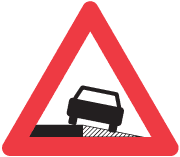
This sign indicates that there is a dangerous verge on the road. A verge is the area that lies between the carriageway and the edge of the road. The sign is used to warn road users about a particular hazard associated with this verge. The sign can be accompanied by a supplementary panel stating the reason why the verge is dangerous. For example, the supplementary panel may specify "Soft verge" or "High edge", indicating that the verge is either soft and uneven or has a high edge that can be a hazard to vehicles. The sign can be put up at the normal distance in accordance with section 11 and can also be used at the start of the dangerous stretch. It can also be mirrored as required to suit the particular stretch of road. The purpose of the sign is to warn road users about the dangerous verge and to encourage careful driving in order to avoid accidents or damage. By respecting the sign and staying alert to the dangerous verge, road users can help to maintain safety on the road and avoid potential hazards.
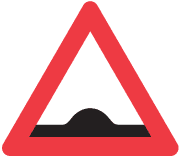
This sign indicates that there are traffic-calming bumps on the road. The sign is used to warn road users that there are bumps or raised sections on the road which can affect how the vehicle drives and call for careful driving. Where the sign is displayed, road users must be aware of the bumps and adjust their driving and speed accordingly. It is important to reduce speed and be prepared to absorb the jolts and vibrations the bumps cause. If the warning applies only to road users on a cycle path or footway, this can be stated on a supplementary panel accompanying the main sign. The purpose of the sign is to warn road users about the traffic-calming bumps and to encourage careful driving in order to avoid discomfort or damage to the vehicle. By respecting the sign and adapting their driving to the bumps, road users can help to maintain safety on the road and avoid any damage or accidents.
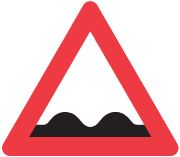
This sign indicates that there are dangerous uneven sections on the road. The sign is used to warn road users that there are bumps or uneven surfaces on the road which can be a hazard to vehicles and call for careful driving. Where the sign is displayed, road users must be aware of the dangerous uneven sections and adjust their driving accordingly. It may be necessary to reduce speed, take care when steering the vehicle and avoid sudden movements that could cause a loss of grip. If the warning applies only to road users on a cycle path or footway, this can be stated on a supplementary panel accompanying the main sign. The purpose of the sign is to warn road users about the dangerous uneven sections of the road and to encourage careful driving in order to avoid discomfort or damage to the vehicle. By respecting the sign and adapting their driving to the uneven road conditions, road users can help to maintain safety on the road and avoid any damage or accidents.
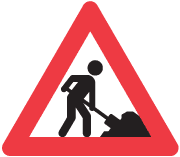
This sign indicates that there are road works on the road. The sign is used to warn road users that work is in progress on the road, which can affect the traffic and call for particular attention and careful driving. If the warning applies only to road users on a cycle path or footway, this can be stated on a supplementary panel accompanying the main sign. Where the sign is displayed, road users must be aware of the road works and follow any instructions or directions given by the workers or the road staff. It may be necessary to reduce speed, follow temporary carriageways or diversions, and watch out for changes in the road signs or markings. The purpose of the sign is to warn road users about the road works and to encourage careful driving, in order to keep both road users and workers safe. It is important to respect the sign and follow the directions of the road staff, in order to avoid accidents and keep traffic flowing evenly and safely past the road works.
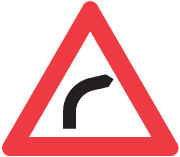
This sign indicates that there are dangerous bends in the road, specifically right-hand bends. The sign is used to warn road users about dangerous bends on the road that may call for particular care and attention. Where the sign is displayed, road users must be aware of the dangerous right-hand bends and adjust their driving accordingly. It may be necessary to reduce speed, allow for the radius of the bend and be prepared to react appropriately in order to avoid accidents or a loss of control. Where the sign is used to warn about more than two bends, the length of the stretch or the number of bends can be stated on a supplementary panel accompanying the main sign. This gives further information about the extent of the bends and what is required of road users. The purpose of the sign is to warn road users about dangerous right-hand bends and to underline the need for careful driving. By respecting the sign and adapting their driving to the dangerous bends, road users can help to maintain safety on the road and reduce the risk of accidents.
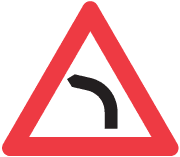
This sign indicates that there are dangerous bends in the road, specifically left-hand bends. The sign is used to warn road users about dangerous bends on the road that may call for particular care and attention. Where the sign is displayed, road users must be aware of the dangerous left-hand bends and adjust their driving accordingly. It may be necessary to reduce speed, allow for the radius of the bend and be prepared to react appropriately in order to avoid accidents or a loss of control. Where the sign is used to warn about more than two bends, the length of the stretch or the number of bends can be stated on a supplementary panel accompanying the main sign. This gives further information about the extent of the bends and what is required of road users. The purpose of the sign is to warn road users about dangerous left-hand bends and to underline the need for careful driving. By respecting the sign and adapting their driving to the dangerous bends, road users can help to maintain safety on the road and reduce the risk of accidents.
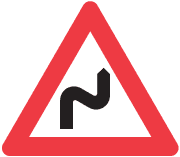
This sign indicates that there are dangerous bends in the road, where the first bend is to the right. The sign is used to warn road users about dangerous bends on the road that may call for particular care and attention, especially where the first bend goes to the right. Where the sign is displayed, road users must be aware of the dangerous bends, and in particular of the first bend to the right, and adjust their driving accordingly. It may be necessary to reduce speed, allow for the radius of the bend and be prepared to react appropriately in order to avoid accidents or a loss of control. Where the sign is used to warn about more than two bends, the length of the stretch or the number of bends can be stated on a supplementary panel accompanying the main sign. This gives further information about the extent of the bends and what is required of road users. The purpose of the sign is to warn road users about dangerous bends, in particular the first bend to the right, and to underline the need for careful driving. By respecting the sign and adapting their driving to the dangerous bends, road users can help to maintain safety on the road and reduce the risk of accidents.
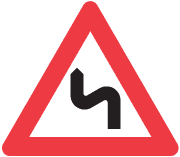
This sign indicates that there are dangerous bends in the road, where the first bend is to the left. The sign is used to warn road users about dangerous bends on the road that may call for particular care and attention, especially where the first bend goes to the left. Where the sign is displayed, road users must be aware of the dangerous bends, and in particular of the first bend to the left, and adjust their driving accordingly. It may be necessary to reduce speed, allow for the radius of the bend and be prepared to react appropriately in order to avoid accidents or a loss of control. Where the sign is used to warn about more than two bends, the length of the stretch or the number of bends can be stated on a supplementary panel accompanying the main sign. This gives further information about the extent of the bends and what is required of road users. The purpose of the sign is to warn road users about dangerous bends, in particular the first bend to the left, and to underline the need for careful driving. By respecting the sign and adapting their driving to the dangerous bends, road users can help to maintain safety on the road and reduce the risk of accidents.
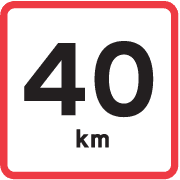
This supplementary panel shows the speed at which the bend or bends can be driven through under normal conditions. The supplementary panel is used to state the recommended speed that road users should keep to when they drive through the bend or bends. The speed shown is based on the weather, road and traffic conditions, and it is important for road users to adapt their driving to the speed stated. The purpose of the supplementary panel is to maintain safety and the flow of traffic by guiding road users on the appropriate speed for the bend or bends. It is important to follow the speed stated in order to reduce the risk of accidents and keep control of the vehicle. Road users should pay attention to this supplementary panel and adjust their speed accordingly, in order to pass safely through the bend or bends under normal driving conditions.
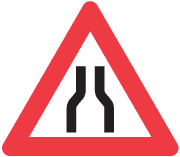
This sign indicates that the road narrows. The sign is used to warn road users that the road is becoming narrower, which can affect the traffic and call for particular care and attention. If the warning applies only to road users on a cycle path, this can be stated on a supplementary panel accompanying the main sign. Where the sign is displayed, road users must be aware of the narrowed road and follow any instructions or directions given by the signage or the road staff. It may be necessary to reduce speed, watch out for changes in the width of the road and be prepared to share the road with oncoming traffic in a more limited space. The purpose of the sign is to warn road users about the narrowed road and to encourage careful driving, in order to keep both road users and workers safe. It is important to respect the sign, follow any directions and adapt your driving to the narrowed stretch of road, in order to avoid accidents and keep traffic flowing evenly and safely.
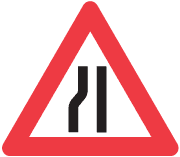
This sign indicates that the road narrows on the left-hand side. The sign is used to warn road users that the road is becoming narrower specifically on the left-hand side, which can affect the traffic and call for particular care and attention. If the warning applies only to road users on a cycle path, this can be stated on a supplementary panel accompanying the main sign. Where the sign is displayed, road users must be aware of the road narrowing on the left and follow any instructions or directions given by the signage or the road staff. It may be necessary to reduce speed, watch out for changes in the width of the road and be prepared to share the road with oncoming traffic in a more limited space, particularly on the left-hand side. The purpose of the sign is to warn road users about the road narrowing on the left and to encourage careful driving, in order to keep both road users and workers safe. It is important to respect the sign, follow any directions and adapt your driving to the narrowed stretch of road, in order to avoid accidents and keep traffic flowing evenly and safely.
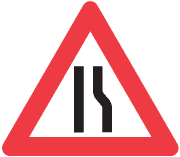
This sign indicates that the road narrows on the right-hand side. The sign is used to warn road users that the road is becoming narrower specifically on the right-hand side, which can affect the traffic and call for particular care and attention. If the warning applies only to road users on a cycle path, this can be stated on a supplementary panel accompanying the main sign. Where the sign is displayed, road users must be aware of the road narrowing on the right and follow any instructions or directions given by the signage or the road staff. It may be necessary to reduce speed, watch out for changes in the width of the road and be prepared to share the road with oncoming traffic in a more limited space, particularly on the right-hand side. The purpose of the sign is to warn road users about the road narrowing on the right and to encourage careful driving, in order to keep both road users and workers safe. It is important to respect the sign, follow any directions and adapt your driving to the narrowed stretch of road, in order to avoid accidents and keep traffic flowing evenly and safely.
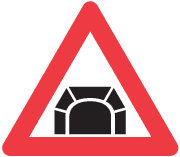
This sign indicates that there is a tunnel. The sign is used to inform road users that there is a tunnel on the road, and it can be useful to state the length of the tunnel or the name of the tunnel on a supplementary panel. The supplementary panel can give further information about the tunnel, such as its length or its specific name. This can help road users prepare to drive through the tunnel and give them important information about that part of the road. The purpose of the sign and the supplementary panel is to inform road users that there is a tunnel and to give relevant information about it. It is important to pay attention to these signs and to follow any instructions given in connection with the tunnel, in order to ensure a safe and trouble-free journey through it.
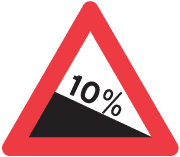
This sign indicates that there is a steep descent. The sign is used to warn road users that the road has a significant downward gradient, and it can be useful to state the maximum gradient on the sign. The figures on the sign show the maximum gradient of the descent. This gives road users an idea of how steep the road will be and helps them adapt their driving and their use of the brakes accordingly. The purpose of the sign is to warn road users about the steep descent and give them the information they need about the gradient of the road. It is important to pay attention to the sign and to follow the instructions given, in order to drive safely down the steep descent. Road users should take particular care, control their speed and use appropriate braking technique in order to keep control and avoid accidents on the road.
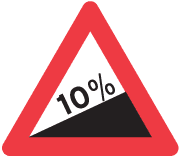
This sign indicates that there is a steep ascent. The sign is used to warn road users that the road has a significant upward gradient, and it can be useful to state the maximum gradient on the sign. The figures on the sign show the maximum gradient of the ascent. This gives road users an idea of how steep the road will be and helps them adapt their driving and their choice of gear accordingly. The purpose of the sign is to warn road users about the steep ascent and give them the information they need about the gradient of the road. It is important to pay attention to the sign and to follow the instructions given, in order to drive safely up the steep ascent. Road users should take particular care, keep up enough speed and choose an appropriate gear in order to keep control and avoid accidents on the road.
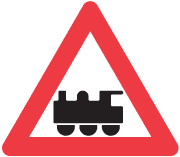
This sign indicates that there is a level crossing without barriers. The sign is used to warn road users that they are approaching a level crossing where there are no barriers to close the road to traffic. The supplementary panel UB 11,1 "Advance warning of Stop" is used to give road users advance warning of the need to stop at the level crossing, and the distance to the level crossing is stated on the supplementary panel. The supplementary panel UB 11,1 "Advance warning of Stop" is used to give road users an early warning that they are approaching a level crossing and must be prepared to stop when they reach it. The distance to the level crossing is stated on the supplementary panel, which gives road users an idea of how far they still have to drive before they reach the crossing. The purpose of the sign and the supplementary panel is to secure the attention and safety of road users at level crossings without barriers. It is important to respect the sign, follow the instructions on the supplementary panel and be prepared to stop at the crossing, in order to avoid dangerous situations and collisions with trains. Road users should follow all traffic rules and take care when approaching and crossing the level crossing.
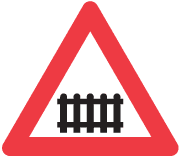
This sign indicates that there is a level crossing with barriers. The sign is used to inform road users that they are approaching a level crossing where there are barriers to close the road to traffic. Where the sign is displayed, road users must be aware that their road crosses a railway line and that trains may be passing. They must respect the barriers and follow any instructions or signals given at the crossing. Barriers are used to prevent traffic from crossing when a train is approaching or passing. The purpose of the sign is to warn road users that there is a level crossing with barriers and to make sure that they take care and follow the necessary safety procedures at the crossing. Road users should respect the barriers, stop when they are down, and only continue across the crossing when it is safe and the barriers have been raised. It is important to follow all signals and warning signs at the level crossing, in order to ensure a safe and trouble-free passage over the railway track.

This sign indicates that there is a single-track level crossing. The sign is used to mark the place where the road crosses a single railway track. These signs are placed immediately in front of level crossings. The sign B13 "Stop" and the supplementary panel UA72 can also be placed below the crossing marker. The crossing marker is used to inform road users that they are approaching a single-track level crossing, where they must take particular care and be prepared for a train to pass. It may be necessary to stop at the crossing, depending on the traffic signals and the safety conditions. The sign B13 "Stop" indicates the need to stop at the crossing, and the supplementary panel UA72 can give road users further advance warning of the need to stop at the level crossing. The purpose of the sign and its accompanying supplementary panels is to secure the attention and safety of road users at single-track level crossings. It is important to follow any instructions to stop, to respect the crossing and to wait until it is safe to cross the track. Road users should take particular care and watch out for any trains approaching or passing the crossing, in order to avoid dangerous situations and accidents.
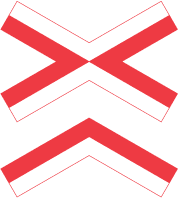
This sign indicates that there is a multi-track level crossing. The sign is used to mark the place where the road crosses several railway tracks. These signs are placed immediately in front of level crossings. The sign B13 "Stop" and the supplementary panel UA72 can also be placed below the crossing marker. The crossing marker is used to inform road users that they are approaching a multi-track level crossing, where they must take particular care and be prepared for trains to pass on several tracks. It may be necessary to stop at the crossing, depending on the traffic signals and the safety conditions. The sign B13 "Stop" indicates the need to stop at the crossing, and the supplementary panel UA72 can give road users further advance warning of the need to stop at the level crossing. The purpose of the sign and its accompanying supplementary panels is to secure the attention and safety of road users at multi-track level crossings. It is important to follow any instructions to stop, to respect the crossing and to wait until it is safe to cross tracks coming from several directions. Road users should take particular care and watch out for any trains approaching or passing the crossing on the different tracks, in order to avoid dangerous situations and accidents.
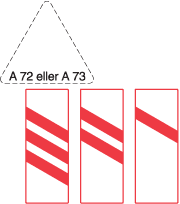
This sign indicates that there are distance markers placed on the left-hand side of the road. The sign is used to show the distance to a level crossing. These distance markers are normally used together with the signs A72 and A73 on roads with heavy and fast-moving traffic. On roads where the permitted speed is 60 km/h or lower, these signs are not normally used. The distance markers consist of a sign with 3 diagonal stripes, placed below the sign A72 or A73. In addition, there may be signs with 2 and 1 diagonal stripes, placed to mark two thirds and one third of the distance to the level crossing respectively. The purpose of these distance markers is to give road users a visual reference for the distance to the level crossing. This is particularly important on roads with high speeds and heavy traffic, where an early warning that you are approaching the level crossing is essential. By using the distance markers, road users can prepare better for the crossing and take the necessary precautions in good time. It is important to pay attention to the distance markers and to follow the instructions given on the signs A72 and A73. By respecting the distance markers and staying aware of the distance shown, road users can make sure they react safely and in good time as they approach the level crossing.
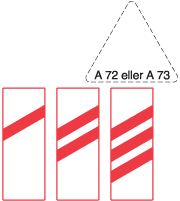
This sign indicates that there are distance markers placed on the right-hand side of the road. The sign is used to show the distance to a level crossing. These distance markers are normally used together with the signs A72 and A73 on roads with heavy and fast-moving traffic. On roads where the permitted speed is 60 km/h or lower, these signs are not normally used. The distance markers consist of a sign with 3 diagonal stripes, placed below the sign A72 or A73. In addition, there may be signs with 2 and 1 diagonal stripes, placed to mark two thirds and one third of the distance to the level crossing respectively. The purpose of these distance markers is to give road users a visual reference for the distance to the level crossing. This is particularly important on roads with high speeds and heavy traffic, where an early warning that you are approaching the level crossing is essential. By using the distance markers, road users can prepare better for the crossing and take the necessary precautions in good time. It is important to pay attention to the distance markers and to follow the instructions given on the signs A72 and A73. By respecting the distance markers and staying aware of the distance shown, road users can make sure they react safely and in good time as they approach the level crossing.
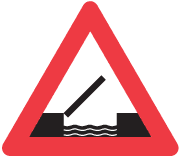
This sign indicates that there is an opening bridge. The sign is used to warn road users that they are approaching a bridge that can be opened to make room for vessels or other traffic on the waterway. Where the sign is displayed, it means that road users must be aware that the bridge may be opened, which can affect access and the traffic on the road. Road users must follow any instructions or signals at the bridge and be prepared to stop if necessary when the bridge is opened. The purpose of the sign is to secure the attention and safety of road users at opening bridges. It is important to respect the sign, follow any instructions and stay aware that the bridge may open, in order to avoid dangerous situations and accidents. Road users should take care, adapt their driving and be prepared for changes in the traffic as they approach an opening bridge.
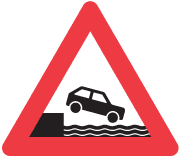
This sign indicates that there is a quayside, ferry berth or similar. The sign is used to inform road users where there is a quay or an area where ferries or other ships can put in. Where the sign is displayed, road users must be aware that they are approaching a quayside or an area used for shipping activity. It may be necessary to take particular care and adapt their driving, especially if there is traffic or activity from ferries or other ships. The purpose of the sign is to secure the attention and safety of road users at quaysides and similar areas. By informing road users where a quayside is, they can expect possible traffic or activity from ships and take the necessary precautions. It is important to respect the sign and any further instructions that may be given on or around the quayside. Road users should take care, watch out for shipping activity and follow any instructions, in order to ensure a safe passage and avoid dangerous situations at the quayside.
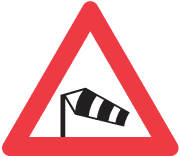
This sign indicates that there is a crosswind. The sign is used to warn road users that there may be strong or unpredictable wind affecting driving on the road. Where the sign is displayed, it means that road users must be aware of the crosswind and be prepared for the challenges it can bring. A crosswind can affect the stability of the vehicle and its ability to hold a straight line, which can call for extra care and correction of your steering. The purpose of the sign is to inform road users about the crosswind and to encourage them to adapt their driving accordingly. It is important to keep a firm hold on the steering wheel and to watch out for any gusts that could affect the vehicle. Road users should drive at a reduced speed, keep a sufficient distance from other vehicles and be prepared for sudden changes in the wind conditions. It is important to respect the sign and to take account of the crosswind indicated. By taking care and adapting their driving, road users can avoid dangerous situations and maintain safety on the road, even in unfavourable wind conditions.
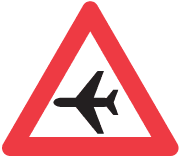
This sign indicates that there are low-flying aircraft. The sign is used to warn road users that aircraft may be flying low over the area. Where the sign is displayed, it means that road users must be aware of low-flying aircraft and be prepared for possible air traffic nearby. Low-flying aircraft can be a potential risk to the traffic on the road, and it is important to stay alert in order to avoid dangerous situations. The purpose of the sign is to inform road users about the possibility of low-flying aircraft and to encourage them to be extra alert. It is important to keep your focus on the road and the surroundings and, if necessary, to adapt your driving to the air traffic. It is important to respect the sign and to follow any instructions that may be given with it. Road users should take care, keep an eye out for low-flying aircraft and avoid distractions that could affect their ability to react quickly and safely. By staying alert, road users can minimise the risk of any dangerous situations arising in connection with low-flying aircraft.
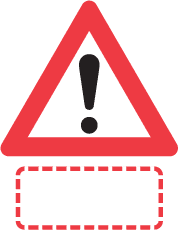
This sign indicates that there is another kind of danger. The sign is used to warn road users about a specific hazard, the nature of which is stated on a supplementary panel placed below the warning sign. Where the sign is displayed, it means that road users must be aware of the hazard stated and take the necessary precautions accordingly. The specific hazard is stated on the supplementary panel placed below the sign. The purpose of the sign is to inform road users about a particular hazard and to encourage them to stay alert and act accordingly. By stating the specific hazard on the supplementary panel, road users can get further information about the precautions they need to take. It is important to respect the sign and to read any supplementary panels carefully in order to understand the specific hazard. Road users should follow the instructions and pay attention to any warnings or instructions from staff attached to the hazard area. By taking care and acting in accordance with the sign and any instructions, road users can minimise the risk of potentially dangerous situations.