D 11.1 — Mandatory direction of travel
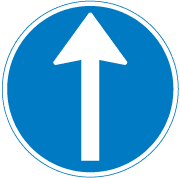
The mandatory sign D 11.1 "Mandatory direction of travel" indicates that a particular direction of travel must be followed on that stretch of road. The sign is used to require road users to follow a specific direction and not to drive in the opposite direction or in any other direction that is not permitted.
The sign is normally placed at the entrance to a road or a stretch of road where the direction of travel changes, and its purpose is to give road users clear instructions about the permitted direction they must follow. The direction of travel stated on the sign must be observed by everyone taking part in traffic, so that traffic flows safely and in an orderly way.
It is important to notice and follow the instructions on the mandatory sign in order to avoid travelling in the wrong direction and potentially dangerous situations. If you are in any doubt about the meaning of a mandatory direction of travel or about other road rules, it is always a good idea to consult the national traffic legislation or the road authorities for further guidance.
D 11.2 — Mandatory direction of travel
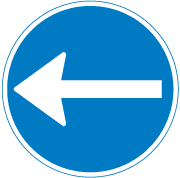
The mandatory sign D 11.2 "Mandatory direction of travel" indicates that a particular direction of travel must be followed on that stretch of road. The sign is used to require road users to drive in a specific direction and to refrain from driving in the opposite direction or in any other direction that is not permitted.
The sign is normally placed at the entrance to a road or a stretch of road where the direction of travel changes, and its purpose is to give road users clear instructions about the permitted direction they must follow. Following the mandatory sign ensures a one-way and safe flow of traffic.
It is important that everyone taking part in traffic observes the direction of travel stated on the mandatory sign. This helps to avoid dangerous situations, conflicts and road accidents. If you are in any doubt about the meaning of a mandatory direction of travel or about other road rules, you are always advised to consult the national traffic legislation or the road authorities for further guidance.
D 11.3 — Mandatory direction of travel
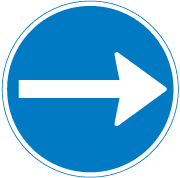
The mandatory sign D 11.3 "Mandatory direction of travel" indicates that a particular direction of travel must be followed on that stretch of road. The sign is used to require road users to drive in a specific direction and to refrain from driving in the opposite direction or in any other direction that is not permitted.
The sign is typically placed at the entrance to a road or a stretch of road where the direction of travel changes. It gives road users clear instructions about the permitted direction they must follow. Following the mandatory sign ensures a one-way and safe flow of traffic.
It is important that everyone taking part in traffic observes the direction of travel stated on the mandatory sign. This helps to avoid dangerous situations, conflicts and road accidents. If you are in any doubt about the meaning of a mandatory direction of travel or about other road rules, you are always advised to consult the national traffic legislation or the road authorities for further guidance.
D 11.4 — Mandatory direction of travel
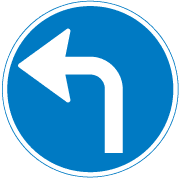
The mandatory sign D 11.4 "Mandatory direction of travel" indicates that a particular direction of travel must be followed on that stretch of road. The sign is used to require road users to drive in a specific direction and to refrain from driving in the opposite direction or in any other direction that is not permitted.
The sign is typically placed at the entrance to a road or a stretch of road where the direction of travel changes. It gives road users clear instructions about the permitted direction they must follow. Following the mandatory sign ensures a one-way and safe flow of traffic.
It is important that everyone taking part in traffic observes the direction of travel stated on the mandatory sign. This helps to avoid dangerous situations, conflicts and road accidents. If you are in any doubt about the meaning of a mandatory direction of travel or about other road rules, you are always advised to consult the national traffic legislation or the road authorities for further guidance.
D 11.5 — Mandatory direction of travel

The mandatory sign D 11.5 "Mandatory direction of travel" indicates that a particular direction of travel must be followed on that stretch of road. The sign is used to require road users to drive in a specific direction and to refrain from driving in the opposite direction or in any other direction that is not permitted.
The sign is typically placed at the entrance to a road or a stretch of road where the direction of travel changes. It gives road users clear instructions about the permitted direction they must follow. Following the mandatory sign ensures a one-way and safe flow of traffic.
It is important that everyone taking part in traffic observes the direction of travel stated on the mandatory sign. This helps to avoid dangerous situations, conflicts and road accidents. If you are in any doubt about the meaning of a mandatory direction of travel or about other road rules, you are always advised to consult the national traffic legislation or the road authorities for further guidance.
D 11.6 — Mandatory direction of travel
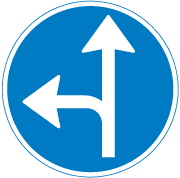
The mandatory sign D 11.6 "Mandatory direction of travel" indicates that a particular direction of travel must be followed on that stretch of road. The sign is used to require road users to drive in a specific direction and to refrain from driving in the opposite direction or in any other direction that is not permitted.
The sign is typically placed at the entrance to a road or a stretch of road where the direction of travel changes. It gives road users clear instructions about the permitted direction they must follow. Following the mandatory sign ensures a one-way and safe flow of traffic.
It is important that everyone taking part in traffic observes the direction of travel stated on the mandatory sign. This helps to avoid dangerous situations, conflicts and road accidents. If you are in any doubt about the meaning of a mandatory direction of travel or about other road rules, you are always advised to consult the national traffic legislation or the road authorities for further guidance.
D 11.7 — Mandatory direction of travel
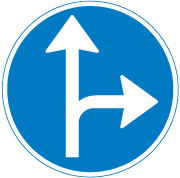
D 11.7 Mandatory direction of travel is a mandatory sign indicating that a particular direction of travel must be followed on that stretch of road. The sign is used to require road users to drive in a specific direction and to refrain from driving in the opposite direction or in any other direction that is not permitted.
The sign is typically placed at the entrance to a road or a stretch of road where it is essential for road safety and for the flow of traffic that vehicles travel in the direction stated. The direction of travel stated must be followed by all road users in order to avoid dangerous situations and road accidents.
It is important to pay attention to and respect the mandatory sign for a mandatory direction of travel, so that traffic flows safely and efficiently. If you are in any doubt about the meaning of a mandatory direction of travel or about other road rules, you are always advised to consult the national traffic legislation or the road authorities for further guidance.
D 11.8 — Mandatory direction of travel
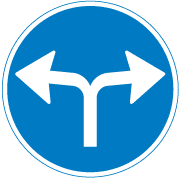
D 11.8 Mandatory direction of travel is a mandatory sign indicating that a particular direction of travel must be followed on that stretch of road. The sign is used to require road users to drive in a specific direction and to refrain from driving in the opposite direction or in any other direction that is not permitted.
The sign is typically placed at the entrance to a road or a stretch of road where it is essential for road safety and for the flow of traffic that vehicles travel in the direction stated. The direction of travel stated must be followed by all road users in order to avoid dangerous situations and road accidents.
It is important to pay attention to and respect the mandatory sign for a mandatory direction of travel, so that traffic flows safely and efficiently. If you are in any doubt about the meaning of a mandatory direction of travel or about other road rules, you are always advised to consult the national traffic legislation or the road authorities for further guidance.
D 12 — Mandatory direction of travel in a roundabout

D 12 Mandatory direction of travel in a roundabout is a mandatory sign indicating the direction of travel that road users must follow in a roundabout. The sign is used to guide road users on the correct direction of travel in the roundabout and to ensure a smooth and safe flow of traffic.
When you see the D 12 sign, it means that you must follow the direction of travel indicated and turn right into the roundabout. This applies to road users approaching the roundabout who wish to continue into the roundabout or turn right at the first exit.
It is important to pay attention to the D 12 sign and to follow the direction of travel indicated in the roundabout, in order to avoid dangerous situations and ensure a smooth flow of traffic. Remember also to observe the other rules for roundabouts, such as giving way to road users already in the roundabout and signalling correctly when you leave it.
If you are in any doubt about the meaning of a mandatory direction of travel in a roundabout or about other road rules, you should always consult the national traffic legislation or the road authorities for further guidance.
D 15.2 — Mandatory passage

D 15.2 Mandatory passage is a mandatory sign indicating that motor vehicles and large mopeds must pass the sign on the side the arrow points to. The sign is designed to guide road users on the required way past an obstacle on the road and to ensure a correct and smooth flow of traffic.
When you see the D 15.2 sign with an arrow, it means that you must follow the direction indicated and pass the sign on the side the arrow points to. This applies to motor vehicles and large mopeds approaching the sign that wish to continue in the direction indicated.
It is important to observe the D 15.2 sign and to follow the passage indicated, in order to avoid confusion and ensure a safe flow of traffic. Note, however, that a mandatory passage does not apply to driving to bus stops, in bus lanes, parking lanes or similar areas. In such cases you must follow the relevant rules and signage for those areas.
If you are in any doubt about the meaning of a mandatory passage or about other road rules, you should always consult the national traffic legislation or the road authorities for further guidance.
D 15.3 — Mandatory passage

D 15.3 Mandatory passage is a mandatory sign indicating that motor vehicles and large mopeds must pass the sign on the side the arrow points to. The purpose of this sign is to ensure a correct direction of travel and flow of traffic on the road.
When you see the D 15.3 sign with an arrow, it means that you must follow the direction indicated and pass the sign on the side the arrow points to. This applies to motor vehicles and large mopeds approaching the sign.
It is important to observe the D 15.3 sign and to follow the passage indicated, so that traffic flows safely and smoothly. Note, however, that a mandatory passage does not apply to driving to bus stops, in bus lanes, parking lanes or similar areas. In such cases you must follow the specific rules and signage for those areas.
Always remember to pay attention to and comply with the traffic rules and signage in force, so that traffic flows safely and efficiently. In case of any doubt, you are advised to consult the national traffic legislation or the road authorities for further guidance.
D 16 — Optional passage
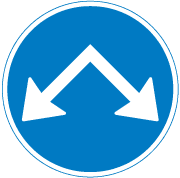
D 16 Optional passage is a mandatory sign indicating that motor vehicles and large mopeds may choose to pass on either side of the sign. The purpose of this sign is to give vehicles the flexibility to choose whichever way past is most appropriate for them.
When you see the D 16 sign, it means that you are free to choose to pass on either the right-hand or the left-hand side of the sign. It is up to you as the driver of the motor vehicle or large moped to judge and choose the most appropriate route.
It is important to show consideration and pay attention to other road users when you make use of an optional passage. Make sure to comply with the traffic rules in force and to keep traffic flowing safely and efficiently.
Always remember to pay attention to and comply with the traffic rules and signage in force, so that traffic flows safely and smoothly. In case of any doubt, you are advised to consult the national traffic legislation or the road authorities for further guidance.
D 21 — Cycle path
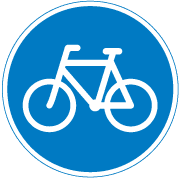
D 21 Cycle path is a road-marking sign that indicates a dedicated lane to be used by cyclists and riders of small mopeds. This lane is reserved for those categories of traffic and may only be used by them, in accordance with section 14(3) of the Danish Road Traffic Act.
When you see the D 21 sign, it means that as a cyclist or a rider of a small moped you must use the cycle path and avoid riding on other carriageways or footways, unless the supplementary panel states otherwise. You must be aware of the rules of the Road Traffic Act and observe them, including showing consideration for other road users and maintaining safety.
Note that pedestrians may also use the cycle path, in accordance with section 10 of the Road Traffic Act. There may, however, be cases where a supplementary panel states that riders of small mopeds must use the carriageway instead of the cycle path.
You are always advised to comply with the signage and road markings and to follow the traffic rules and local regulations in force. If you are in doubt, or need further guidance, you should consult the national traffic legislation or the road authorities.
D 22 — Footpath
D 22 Footpath is a road-marking sign that indicates a dedicated lane to be used by pedestrians. This lane is reserved for pedestrians and may only be used by them.
When you see the D 22 sign, it means that as a pedestrian you must use the footpath and avoid walking on other carriageways or cycle paths. The footpath is designed to provide a safe passage for pedestrians and to separate them from vehicles and cyclists.
It is important to respect and follow the footpaths provided, as they are designed to keep pedestrians safe as they move through the traffic area. As a pedestrian you should always be aware of your surroundings, comply with the traffic rules and show consideration for other road users.
You are always advised to comply with the signage and road markings and to follow the traffic rules and local regulations in force. If you are in doubt, or need further guidance, you should consult the national traffic legislation or the road authorities.
D 23 — Bridleway
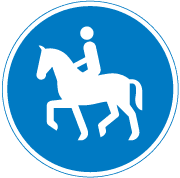
D 23 Bridleway is a road-marking sign that indicates a dedicated lane to be used by riders on horseback. This lane is reserved for horses and riders and may only be used by them.
When you see the D 23 sign, it means that as a rider you must use the bridleway and avoid riding on other carriageways, cycle paths or footpaths. The bridleway is designed to provide a safe passage for riders and to separate them from vehicles, cyclists and pedestrians.
It is important to respect and follow the bridleways provided, as they are designed to keep both riders and horses safe as they move through the traffic area. As a rider you should always be aware of your surroundings, comply with the traffic rules and show consideration for other road users.
You are always advised to comply with the signage and road markings and to follow the traffic rules and local regulations in force. If you are in doubt, or need further guidance, you should consult the national traffic legislation or the road authorities.
D 26 — Divided path
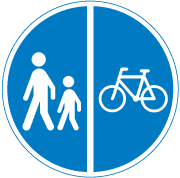
D 26 Divided path is a road-marking sign that indicates a path with several lanes, separated either by road markings, verges or something similar. The sign indicates that each lane on the path is to be used by a specific category of traffic, shown by an accompanying symbol. Note that each lane may only be used by the category of traffic shown, and not by others.
The purpose of the D 26 sign is to create an orderly and safe flow of traffic on the divided path by separating the different categories of traffic. Dividing the path into separate lanes reduces the risk of collisions or accidents between different road users, for example cyclists, pedestrians or moped riders.
When you meet a D 26 sign, it is important to respect and keep to the lane that applies to your category of traffic. This helps to create a safe and harmonious flow of traffic on the path. Remember also to pay attention to other road users and to show consideration and courtesy as you travel along the divided path.
You are always advised to comply with the road markings and to follow the traffic rules and local regulations in force. If you are in doubt, or need further guidance, you should consult the national traffic legislation or the road authorities.
D 27 — Shared path
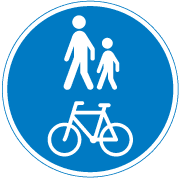
D 27 Shared path is a road-marking sign that indicates a path to be used by several different categories of traffic, shown by accompanying symbols. The sign indicates that the path is designed to be shared between the specific categories of traffic shown.
The purpose of the D 27 sign is to create a shared path where different road users such as cyclists, pedestrians and possibly other categories of traffic can travel together. It is important that all road users on the shared path show mutual consideration and courtesy towards one another, in accordance with section 3(1) of the Danish Road Traffic Act.
When you travel on a shared path, you must pay attention to and respect the symbols shown, which indicate the categories of traffic that are permitted. It is important to show consideration for other road users and to adapt the way you ride or walk to the rules and local regulations in force. This contributes to a safe and harmonious flow of traffic on the shared path.
Always remember to follow the national traffic rules and the instructions of the road authorities for the shared path. If special considerations or rules apply to the shared path, these may also be shown on accompanying signs or information boards along the path. Pay attention and show consideration, so that all road users can enjoy a safe and secure journey on the shared path.
D 55 — Minimum speed
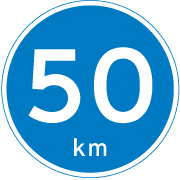
D 55 Minimum speed is a road-marking sign that indicates a mandatory minimum speed for moving traffic, except for cyclists and riders of small mopeds. The sign indicates that drivers must maintain a speed that is at least equal to the value shown, unless particular conditions such as the weather, the traffic or the signage call for a lower speed.
The purpose of the D 55 sign is to ensure an even and consistent flow of traffic on the road and to avoid unnecessary obstruction of the traffic stream. The minimum speed may be shown in kilometres per hour (km/h) on the sign. Drivers who are not cyclists or riders of small mopeds must observe this minimum speed, unless there are particular circumstances that justify a lower speed.
The mandatory minimum speed limit applies until it is lifted by sign D 56 (End of minimum speed) or by a distance indication on a supplementary panel. It is important to pay attention to any changes or information on the supplementary panels that may affect or clarify how the minimum speed limit applies.
As a road user it is important to observe the speed limits shown and to adapt your driving to the conditions on the road. By respecting the minimum speed limit you contribute to a safe and efficient flow of traffic for all road users. Always pay attention to the signage and follow the traffic rules in force, so that your driving is safe and responsible.
D 56 — End of minimum speed
End of minimum speed.