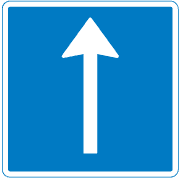
E 11.1 — Overhead arrow marking
Signs with arrow markings, such as E 11.1, are used to show the specific directions of travel at a junction that the lane in question is intended for. These signs are suspended above the road and use arrows to show which direction traffic can take in that particular lane.
The purpose of arrow marking signs is to give road users clear guidance about which direction they must follow to reach their destination. By following the arrows on the signs, drivers can navigate safely through the junction and choose the correct lane for the direction they want to travel in.
It is important for the flow of traffic and for road safety that drivers follow the arrow marking signs correctly and adjust their driving accordingly. These signs help to create a more structured and organised flow of traffic at the junction and reduce the risk of wrong manoeuvres and collisions.
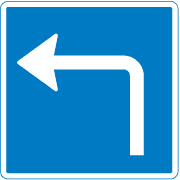
E 11.4 — Overhead arrow marking
Signs with arrow markings, such as E 11.4, are used to show the specific directions of travel at a junction that the lane in question is intended for. These signs are suspended above the road and use arrows to show which direction traffic can take in that particular lane.
The purpose of arrow marking signs is to give road users clear guidance about which direction they must follow to reach their destination. By following the arrows on the signs, drivers can navigate safely through the junction and choose the correct lane for the direction they want to travel in.
It is important for the flow of traffic and for road safety that drivers follow the arrow marking signs correctly and adjust their driving accordingly. These signs help to create a more structured and organised flow of traffic at the junction and reduce the risk of wrong manoeuvres and collisions.
E 11.5 — Overhead arrow marking
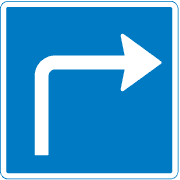
Signs with arrow markings, such as E 11.5, are also used to show the specific directions of travel at a junction that the lane in question is intended for. These suspended signs use arrows to show which direction traffic can take in the corresponding lane below the sign.
The purpose of the E 11.5 signs is to give road users clear and unambiguous instructions about which direction they must follow to reach the destination they want. By following the arrows on the signs, drivers can easily identify the correct lane and make the right driving decision.
Using arrow marking signs correctly, including E 11.5, is essential in order to keep traffic at the junction flowing safely and efficiently. These signs help to minimise confusion and the risk of wrong manoeuvres, as they clearly show which direction each lane leads in.
It is important for road safety and for the general flow of traffic that road users observe and follow the arrow marking signs closely and adjust their driving accordingly. This helps to avoid conflicts and to ensure a smooth and safe passage through the junction.
E 11.6 — Overhead arrow marking
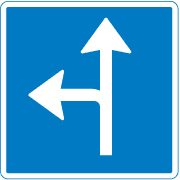
Signs with overhead arrow markings, including E 11.6, are used to indicate the specific directions of travel at a junction that the associated lane is intended for. The purpose of these signs is to help road users choose the right lane based on the destination they want to reach.
The signs are normally placed above the relevant lane and use arrows to show which direction traffic must take in that particular lane. By following the arrow marking signs, drivers can make the correct choices and avoid ending up in the wrong lane, which does not lead in the direction they want.
Using overhead arrow markings correctly is essential for a smooth and safe flow of traffic at the junction. It helps to reduce confusion, conflicts and wrong manoeuvres by giving clear visual instructions about how traffic must move through the junction.
It is important that road users observe and follow the arrow marking signs carefully in order to maintain road safety and an efficient flow of traffic. By choosing the right lane in accordance with the arrow marking signs, road users can avoid unnecessary lane changes and contribute to a smoother and more structured flow of traffic at the junction.
E 11.7 — Overhead arrow marking
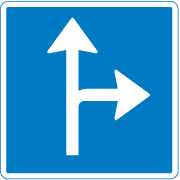
Signs with overhead arrow markings, including E 11.7, are used to show the specific directions of travel at a junction that the associated lane is intended for. The purpose of these signs is to give road users clear information about which direction they must follow in that particular lane.
The signs are normally placed above the relevant lane and use arrows to show which direction traffic must take at the junction. By following the arrow marking signs, drivers can make the right decisions and navigate safely through the junction.
Using overhead arrow markings correctly is essential in order to maintain road safety and an efficient flow of traffic at the junction. It helps to minimise confusion, conflicts and driving errors by giving clear visual instructions about how traffic must move through the junction.
It is important that road users observe and follow the arrow marking signs closely in order to ensure a safe and smooth flow of traffic. By choosing the right lane in accordance with the arrow marking signs, road users can avoid unnecessary lane changes and contribute to a more efficient and structured flow of traffic at the junction.
E 11.8 — Overhead arrow marking
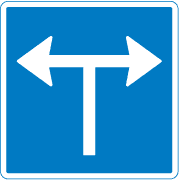
Signs with overhead arrow markings, including E 11.8, are used to show the specific directions of travel at a junction that the associated lane is intended for. The purpose of these signs is to give road users clear information about which direction they must follow in that particular lane.
The signs are normally placed above the relevant lane and use arrows to show which direction traffic must take at the junction. This helps road users to orient themselves correctly and make the right driving decisions for the direction they want to travel in.
Using overhead arrow markings correctly is essential in order to maintain road safety and an efficient flow of traffic at the junction. It helps to minimise confusion, conflicts and driving errors by giving clear visual instructions about how traffic must move through the junction.
It is important that road users observe and follow the arrow marking signs closely in order to ensure a safe and smooth flow of traffic. By choosing the right lane in accordance with the arrow marking signs, road users can avoid unnecessary lane changes and contribute to a more efficient and structured flow of traffic at the junction.
E 11.9 — Overhead arrow marking
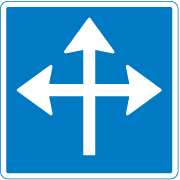
Signs with overhead arrow markings, including E 11.9, are used to show the specific directions of travel at a junction that the associated lane is intended for. The purpose of these signs is to give road users clear instructions about which direction they must follow in that particular lane.
The signs are normally placed above the relevant lane and use arrows to show which direction traffic must take at the junction. This helps to create clarity and reduce confusion for road users by guiding them into the correct direction of travel at the junction.
Using overhead arrow markings correctly is essential in order to maintain road safety and a smooth flow of traffic at the junction. It helps to minimise the risk of driving errors and conflicts by giving road users visual guidance on how to navigate the junction and choose the right direction of travel.
It is important that road users follow the arrow marking signs closely and choose the correct lane accordingly. By doing so, road users can help to create a safer and more efficient flow of traffic at the junction and minimise potential hazards or disruption for other road users.
Note that overhead arrow markings are an important part of the road marking system, which is designed to ease the flow of traffic and improve road safety. It is therefore important to respect and follow the directions of travel shown when you pass through the junction.
E 15 — Lanes at a junction
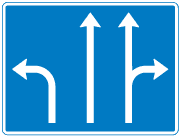
The sign with overhead arrow markings, E 15, is used to show the specific directions of travel at a junction that the individual lanes are intended for. The purpose of this sign is to give road users information about which directions of travel are available in each lane at the junction.
The sign can be accompanied by markings on the carriageway, verges or similar, giving further guidance on how the lanes are divided and the directions of travel that go with them. This can include road lines, arrows or other symbols that help road users choose the correct lane at the junction.
If a traffic sign is shown next to an arrow on the E 15 sign, that sign applies only to the specific lane indicated by the arrow. This gives road users more precise guidance, as they can identify which lane is intended for a particular direction of travel.
Note that during road works the signs and any supplementary panels may be produced with black symbols on a yellow background. This is to make sure that they are clearly visible and easy to recognise for road users, even in poor weather or light conditions.
It is essential that road users comply closely with the directions of travel shown and use the correct lanes at the junction. This helps to keep traffic flowing safely and efficiently and minimises the risk of driving errors or conflicts between vehicles.
Always remember to pay attention to the road markings and to follow the instructions given as you approach a junction. This helps to create a smooth and safe flow of traffic for all road users.
E 16,1 — Lane layout with merging
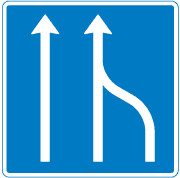
The sign E 16,1, also known as lane layout with merging, is used to show how the lanes run and in which direction traffic travels at a junction or in a merging situation. The sign can show various elements such as verges, obstacles and the like in order to illustrate the road conditions. It can also show lanes carrying traffic in the opposite direction.
The purpose of the sign is to give road users information about how the lanes run and which direction traffic travels in that particular merging situation. It can be useful for road users to understand how the different lanes take them through the junction and what opportunities they have to change lane.
Note that if a traffic sign is shown next to an arrow on the E 16,1 sign, that sign applies only to the specific lane indicated by the arrow. This helps road users understand which lane is intended for a particular direction of travel or manoeuvre.
During road works, the signs and any supplementary panels may be produced with black symbols on a yellow background. This is done to make sure that the signs are clearly visible and easy to recognise for road users, even in poor weather or light conditions.
It is important for road users to show mutual consideration, particularly where the number of lanes is reduced, as set out in section 18(4) of the Danish Road Traffic Act. This means that road users must be aware of each other, show consideration and adapt their driving in order to keep traffic flowing smoothly and safely.
Always remember to follow the road markings and instructions as you approach a junction or a merging situation. This helps to keep traffic flowing safely and efficiently for all the road users involved.
E 16,2 — Lane layout with lane change
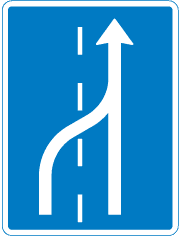
The sign E 16,2, also known as lane layout with lane change, is used to show how the lanes run and in which direction traffic travels on a stretch of road where a lane change is needed. The sign can show various elements such as verges, obstacles and the like in order to illustrate the road conditions. It can also show lanes carrying traffic in the opposite direction.
The purpose of the sign is to inform road users about how the lanes run along the road and which direction traffic travels in. Where a lane change is involved, it is important that the driver changing lane makes sure that it can be done safely and without danger or undue inconvenience to other road users, as described in section 18(2) of the Danish Road Traffic Act. This means paying attention to other vehicles, using the indicators and making the lane change in a safe and considerate way.
If a traffic sign is shown next to an arrow on the E 16,2 sign, that sign applies only to the specific lane indicated by the arrow. This helps road users understand which lane is intended for a particular direction of travel or manoeuvre.
During road works, the signs and any supplementary panels may be produced with black symbols on a yellow background. This makes sure that the signs are clearly visible and easy to recognise for road users, even in poor weather or light conditions.
Always remember to follow the road markings and instructions when you change lane or drive along a stretch of road with lane changes. This contributes to a safe and smooth flow of traffic for all the road users involved.
E 17 — Pedestrian crossing
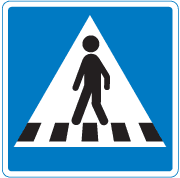
The sign E 17, also known as pedestrian crossing, indicates that there is a pedestrian crossing on the road. A pedestrian crossing is a marked crossing zone for pedestrians, where they have priority to cross the road. The E 17 sign is used to inform drivers and other road users that this pedestrian crossing is there and encourages greater attention and consideration towards pedestrians.
It is important for drivers to be aware of the pedestrian crossing and to respect pedestrians' priority as they approach it. Drivers must be ready to stop or make room for pedestrians who want to cross the road at this marked area.
The pedestrian crossing is an important element of road safety and improves safety for pedestrians by giving them a marked and expected crossing zone. It is also important for pedestrians to use the pedestrian crossing correctly and to cross the road safely, taking account of drivers and following the traffic rules in force.
Always remember to show consideration and pay attention as you approach or drive across a pedestrian crossing. Respect pedestrians' priority and help to create safe and secure road traffic for all road users.
E 18 — No through road
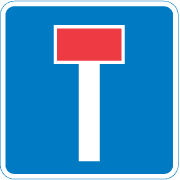
The sign E 18, also known as a no through road sign, is used to indicate that the road is a dead end and has no onward connection. The sign normally shows a black rectangle with a white border and a large black X in the middle.
In some cases a thin white line can be added to the sign to indicate that the road continues as a path or footpath. This line indicates that although the road ends as a road for vehicles, pedestrians or cyclists can continue along the path that leads on from it.
It is important for drivers to be aware of the E 18 sign and to respect the fact that the road does not continue. Drivers must be prepared to turn or turn around when they reach the end of the road and avoid continuing into areas that are not intended for vehicles.
If a thin white line has been added, pedestrians and cyclists must be aware that the road may continue as a path, and they can safely continue along it as part of their route.
Always remember to follow the traffic signs and instructions given, including the E 18 sign, in order to keep traffic flowing safely and smoothly. Respect the conditions on the road and pay attention to any changes in its character and in how it continues.
E 19 — One-way traffic

The sign E 19 indicates one-way traffic, which means that road users are only permitted to drive in one particular direction on that road. The sign normally shows a white arrow on a blue background, indicating the permitted direction of travel.
When you meet the E 19 sign, you must comply closely with the direction of travel shown and refrain from driving against the flow. It is important to be aware that one-way traffic has been introduced in order to keep traffic flowing smoothly and safely and to avoid dangerous situations and conflicts between vehicles.
Note that one-way traffic normally applies only to vehicles and not to cyclists and pedestrians. Those road users may be permitted to travel in both directions on the road in question, unless something else is stated.
It is important to respect one-way traffic and to follow the direction of travel shown, in order to keep traffic flowing safely and smoothly. Breaching a one-way traffic rule can create dangerous situations and is contrary to the Road Traffic Act.
Always remember to pay attention to the traffic signs and instructions in force, including the E 19 sign, when you are out on the road. Respect the direction of travel and show consideration for other road users in order to maintain road safety.
E 21,1 — Recommended route for cyclists
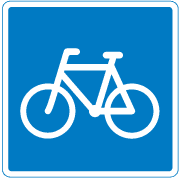
The sign E 21,1 indicates a recommended route for cyclists. It marks a road, path or similar that is suitable for use by bicycles and by the other categories of traffic shown by symbols.
Note that on certain sections of the recommended route marked with E 21,1, riding a small moped may be prohibited. This means that some sections may not be suitable for use by a small moped, and it is important to comply with any prohibition signs or instructions in order to stay safe and comply with the traffic rules.
For cyclists, riders and walkers there are also route signposting signs designated F 21, which show recommended paths and roads for those road users. These signs can be seen as a supplement to the E 21,1 sign and help to guide cyclists, riders and walkers along their specific routes.
It is important to pay attention to the signage, including the E 21,1 sign and any F 21 signs that go with it, when you follow the recommended route for cyclists. Respect any prohibition signs and instructions in order to ensure a safe and pleasant cycling experience and to comply with the traffic rules in force.
E 21,2 — Recommended route for walkers
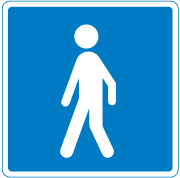
The sign E 21,2 indicates a recommended route for walkers. It marks a road, path or similar that is suitable for use by walkers and by the other categories of traffic shown by symbols.
The E 21,2 signs show the road and the path that are suitable for use by walkers and by the other road users shown by symbols. These signs help walkers find the recommended route and ensure a safe and pleasant walk.
Note that there are also route signposting signs designated F 21, which give specific directions for path users, including cyclists, riders and walkers. These signs can be seen as a supplement to the E 21,2 sign and help to guide the different types of road user along their recommended routes.
By following the E 21,2 signs and any F 21 signs that go with them, walkers can find the best route for their needs and ensure a pleasant and safe walk. It is important to comply with the signage and any instructions in order to stay safe and respect the traffic rules.
E 21,3 — Recommended route for horse riders
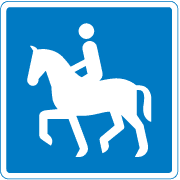
The sign E 21,3 indicates a recommended route for horse riders. It marks a road, path or similar that is suitable for use by riders and by the other categories of traffic shown by symbols.
The E 21,3 signs show the road and the path that are suitable for use by riders and by the other road users shown by symbols. These signs help riders find the recommended route and ensure a safe and pleasant ride.
Note that there are also route signposting signs designated F 21, which give specific directions for path users, including cyclists, riders and walkers. These signs can be seen as a supplement to the E 21,3 sign and help to guide the different types of road user along their recommended routes.
By following the E 21,3 signs and any F 21 signs that go with them, riders can find the best route for their needs and ensure a pleasant and safe ride. It is important to comply with the signage and any instructions in order to stay safe and respect the traffic rules.
E 21,4 — Recommended route for small mopeds
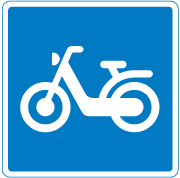
The sign E 21,4 indicates a recommended route for small mopeds. It shows a road, path or similar that is suitable for use by small mopeds and by the other categories of traffic shown by symbols.
The E 21,4 signs mark the recommended route where small mopeds and the other road users shown by symbols can travel safely and efficiently. These signs help riders of small mopeds find the best route and ensure pleasant and safe riding.
Note that there are also route signposting signs designated F 21, which give specific directions for path users, including cyclists, riders and walkers. These signs can be part of the overall signage and signposting that helps different road users find their recommended routes.
By following the E 21,4 sign and any F 21 signs that go with it, riders of small mopeds can find the best route for their vehicle and ensure safe and convenient riding. It is important to comply with the signage and any instructions in order to stay safe and respect the traffic rules.
E 22,1 — Recommended route for lorries
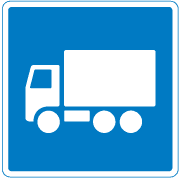
The sign E 22,1 indicates a recommended route for lorries. It shows a road or a route that is particularly suitable for lorries and helps them plan their driving.
The sign E 22,1 is used to guide lorry drivers and recommend roads that are well suited to lorries. These roads may have particular features that meet the needs of lorries, such as wider carriageways, greater bridge clearances or better road conditions for heavy vehicles.
The purpose of the sign is to lead lorries away from roads that may be unsuitable or subject to restrictions, such as narrow roads, low bridges or roads with a low bearing capacity. By following the recommended route, lorry drivers can avoid unnecessary obstacles and ensure more efficient and safer transport.
Note that the sign E 22,1 indicates a recommended route and is not a mandatory requirement. It is up to the lorry driver to decide whether to follow the recommended route, based on their specific needs and circumstances.
By taking account of the sign E 22,1, lorry drivers can find the most suitable route for their vehicle and avoid potential problems on the road. It is important to pay attention to any further signage and instructions in order to comply with the traffic rules and maintain safety.
E 22,2 — Recommended route for vehicles carrying dangerous goods
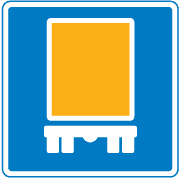
The sign E 22,2 indicates a recommended route for vehicles carrying dangerous goods. It shows a road or a route that is particularly suitable for the carriage of dangerous goods and helps to maintain safety and compliance with the relevant regulations.
The sign E 22,2 is used to guide vehicles carrying dangerous goods and to recommend roads that meet the necessary requirements and restrictions for this type of transport. Roads marked with this sign may have particular features and safety measures, such as emergency lay-bys, firefighting equipment, or restrictions on how close they run to residential or sensitive areas.
The purpose of the sign is to lead vehicles carrying dangerous goods away from roads that are not suitable for this type of transport and to make sure that they follow the rules and provisions in force for the safe carriage of dangerous goods. By following the recommended route, drivers can avoid potential hazards and reduce the risk of accidents or damage.
Note that the sign E 22,2 indicates a recommended route and is not a mandatory requirement. It is up to drivers to decide whether to follow the recommended route, based on their specific load and circumstances. It is, however, important to comply with all the relevant rules and provisions for the carriage of dangerous goods throughout the journey.
E 22,4 — Recommended route for buses
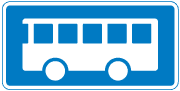
The sign E 22,4 indicates a recommended route for buses. It shows a road or a route that is particularly suitable for bus services and may include facilities that buses need, such as bus stops, bus lanes or other bus-related infrastructure.
The sign is used to guide buses and to recommend roads that are well suited to bus services in terms of safety, ease of movement and route planning. Roads marked with this sign may have advantages such as dedicated bus lanes, priority at traffic signals or other features that improve buses' journey times and efficiency.
The purpose of the sign is to help buses find the most appropriate route, one that takes account of their specific needs and gives passengers a reliable and efficient travel experience. The recommended route can take account of the size of the buses, the width of the roads and height restrictions, as well as any restrictions or priority arrangements affecting how easily buses can get through.
Note that the sign E 22,4 indicates a recommended route and is not a mandatory requirement. Bus drivers are still free to choose other roads or routes based on their changing circumstances and needs. It is, however, important to comply with all the relevant traffic rules and provisions for safe driving.
By taking account of the sign E 22,4, buses can find the most appropriate route for their needs and give priority to passenger comfort and efficiency. It is also important to pay attention to any further signage and instructions and to follow any local or regional requirements and recommendations for bus services.
The sign E 22,4 is an aid for guiding buses onto roads that are well suited to bus services and can contribute to more efficient and safer bus operation.
E 23 — Guidance for disabled road users
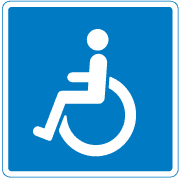
The sign E 23, Guidance for disabled road users, is designed to give guidance and information to people with a disability or with limited mobility. The sign can carry symbols showing accessible facilities and aids, such as ramps that make it easier to get into buildings or public areas.
A typical symbol that can be shown on the sign is a ramp icon, indicating that there is a wheelchair-accessible ramp. This symbol can help people with a disability identify places where they can get access and get around easily.
A supplementary panel below the sign can state further information, such as the gradient of the ramp. This is useful for people in a wheelchair or with walking difficulties, as it helps them judge whether the gradient of the ramp is suitable for their needs.
Where parking bays are involved, a supplementary panel can state that the parking space is reserved for particular vehicles, in accordance with the provisions of section 92(3) of the Danish Road Traffic Act. This can make sure that the relevant parking spaces are available for vehicles used by disabled people who need easy access to facilities and services.
The sign E 23 is designed to guide and inform people with a disability about the availability of certain facilities or areas that are adapted to their needs. By including the relevant symbols and information, the sign can help to create a more inclusive and accessible traffic environment for people with a disability. It is important to respect and follow the instructions given on the sign, so that the facilities remain available for those who need them.
E 26.1 — Pedestrian subway or footbridge
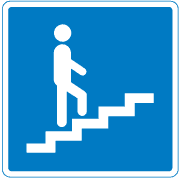
The sign E 26.1, Pedestrian subway or footbridge, indicates that there is a special facility designed for pedestrians. There may either be a pedestrian subway, allowing pedestrians to cross the road below ground, or a footbridge, allowing them to cross the road on a raised structure.
These facilities are specially designed to keep pedestrians safe and make crossing convenient for them, particularly at places with heavy traffic or where the road is wide and difficult to cross on foot.
The sign E 26.1 acts as guidance and information for pedestrians and makes them aware that there is a pedestrian subway or footbridge. By following the instructions given, pedestrians can choose the safest and most appropriate way to cross the road.
It is important for pedestrians to use these special facilities where they are available, as this helps to keep them safe and helps to maintain a smooth flow of traffic on the road. Pedestrian subways and footbridges are important elements in creating a safe and accessible traffic environment for pedestrians.
E 26.2 — Pedestrian subway or footbridge
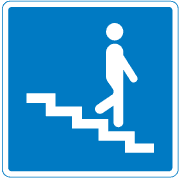
The sign E 26.2, Pedestrian subway or footbridge, indicates that there is a facility specifically designed for pedestrians. There may either be a pedestrian subway, allowing pedestrians to cross the road below ground, or a footbridge, allowing them to cross the road on a raised structure.
These facilities are important in order to keep pedestrians safe and make crossing convenient for them, particularly at places with heavy traffic or where the road is wide and difficult to cross on foot.
The sign E 26.2 acts as guidance and information for pedestrians and makes them aware that there is a pedestrian subway or footbridge. By following the instructions given, pedestrians can choose the safest and most appropriate way to cross the road.
It is important for pedestrians to use these special facilities where they are available, as this helps to keep them safe and helps to maintain a smooth flow of traffic on the road. Pedestrian subways and footbridges are essential in creating a safe and accessible traffic environment for pedestrians, and the sign E 26.2 helps to inform pedestrians and direct them to these facilities.
E 31 — Bus stop
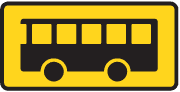
The sign E 31, Bus stop, indicates a place where buses are permitted to stop and where the provisions of section 29(2) of the Danish Road Traffic Act, which regulate bus stops, apply. This place is specially intended for buses on scheduled services and should only be used by such buses.
The sign E 31 is guidance and information for both bus drivers and other road users. It signals to buses that they are entitled to stop at this particular place to pick up or set down passengers. At the same time it informs other road users that they must watch out for buses stopping there.
It is important to respect and comply with the use of the bus stop as stated on the sign. Buses depend on these dedicated areas in order to run their services efficiently and safely. Reserving the space for buses helps to ease the traffic and makes things more convenient for passengers.
Remember that other vehicles should not normally stop or park at a bus stop, unless this is specifically permitted or required by local rules or because of an emergency. It is important to respect the buses and give them room, so that they can carry out their transport duties efficiently and safely.
E 32 — Taxi rank
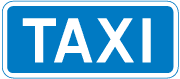
The sign E 32, Taxi rank, indicates a place specifically intended as a stand for taxis. It marks an area where taxis are permitted to stop to pick up or set down passengers.
The sign E 32 acts as guidance and information for both taxi drivers and other road users. It signals to taxi drivers that they are entitled to stop at this particular place to serve their customers. At the same time it informs other road users that this area is reserved for taxis.
It is important to respect and comply with the use of the taxi rank as stated on the sign. Taxi drivers depend on these dedicated areas in order to serve their passengers efficiently and safely. Reserving the space for taxis helps to ease the traffic and makes things more convenient for both drivers and passengers.
Other vehicles should not normally stop or park at a taxi rank, unless this is specifically permitted or required by local rules or because of an emergency. It is important to give the taxis room and to avoid blocking access to the rank.
Remember to follow local rules and provisions, which can vary from area to area. These rules may include time restrictions, charges or other specific requirements for the use of the taxi rank.
E 33.1 — Parking
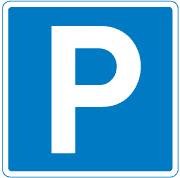
The sign E 33.1, Parking, indicates an area intended for parking vehicles. The sign can be used on its own or together with other supplementary panels to state specific conditions or restrictions for the parking.
Where the sign is used on its own, it signals to road users that the area in question is intended for parking vehicles. This can be either an outdoor or an indoor parking area. If there is an angled roof symbol above the symbol, this indicates that the parking is indoors.
Directions, the distance to the car park and any restrictions on or relaxations of access to parking can be stated either directly on the sign or on a supplementary panel.
Note that if the parking area is not marked out on the carriageway, the extent of the parking area on the carriageway can be indicated using the supplementary panels UE 33,1-33,4. In that case the parking provisions apply in the same way as stated in section 17 concerning C 61-62, UC 33 and UC 61-62.
If the sign E 33 is accompanied by the supplementary panel E 23, Guidance for disabled road users, this indicates that the parking area may only be used for stopping and parking vehicles that carry a permit for disabled parking issued under section 88a of the Danish Road Traffic Act.
E 33.2 — Parking
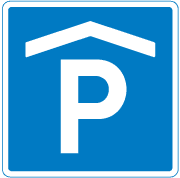
The sign E 33.2, Parking, indicates an area intended for parking vehicles. The sign can be used on its own or together with supplementary panels to state specific conditions or restrictions for the parking.
Where the sign is used on its own on a zone sign, it signals restrictions on access to parking in the area in question. If there is an angled roof symbol above the symbol, this indicates that the parking is indoors.
Directions, the distance to the car park and any restrictions on or relaxations of access to parking can be stated either directly on the sign or on a supplementary panel.
If the parking area lies on the carriageway without being marked out, the extent of the parking area on the carriageway is indicated using the supplementary panels UE 33,1-33,4. In that case the parking provisions apply in the same way as stated in section 17 concerning C 61-62, UC 33 and UC 61-62.
If the sign E 33 is accompanied by the supplementary panel E 23, Guidance for disabled road users, this indicates that the parking area may only be used for stopping and parking vehicles that carry a permit for disabled parking issued under section 88a of the Danish Road Traffic Act.
In areas where parking restrictions generally apply to certain vehicles, those restrictions can be lifted locally by accompanying E 33 with a supplementary panel showing the symbol for the vehicles in question and the word "Permitted" below the symbols.
A black supplementary panel can refer to the rules for privately run parking schemes that may apply in the area.
It is important to comply with the parking rules and conditions stated in order to avoid fines or other consequences. Respect any disabled parking signs and follow the guidance given, so that the area remains accessible to all road users.
E 37 — Crawler lane
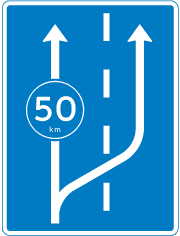
The sign E 37, Crawler lane, indicates a special lane to be used by vehicles travelling at a lower speed than the one stated for the rest of the carriageway. The purpose of the crawler lane is to make sure that slow-moving vehicles can use a dedicated lane, so that they do not obstruct the rest of the traffic.
Under the Road Traffic Act, and specifically section 14(5), vehicles travelling at a lower speed than the one permitted on the ordinary carriageway must use the crawler lane. The sign E 37 clearly marks this special lane and indicates that it is to be used by slow-moving vehicles.
It is important for road safety and for the ease of traffic that drivers comply with the use of the crawler lane when they are travelling at a lower speed than the one permitted on the ordinary carriageway. By using the crawler lane, they can avoid disturbing or obstructing the rest of the traffic, which is travelling at a higher speed.
It is important to pay attention to the signage and to follow the rules stated for the crawler lane. Respect and comply with the speed limits and directions that may be stated on the sign or on the supplementary panels that go with it.
E 41 — Speed indication for exit road
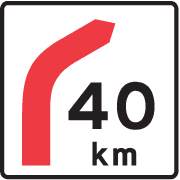
The sign E 41, Speed indication for exit road, states the recommended speed at which a bend on an exit road can be driven through under normal conditions. The purpose of the sign is to give the driver of a vehicle guidance about the speed that is considered safe and appropriate for driving through the bend on the exit road.
Note that the speed stated on the sign is a recommendation and not a statutory speed limit. The driver must, however, take account of the speed stated in order to drive safely and smoothly through the bend.
Road and traffic conditions can vary even under normal circumstances, so it is important to adapt your speed to the actual conditions on the exit road. If there are particular conditions such as the weather, the volume of traffic or other obstacles, it may be necessary to reduce speed further in order to stay safe.
The driver must pay attention to the signs and respect the recommended speed stated, as this contributes to a safe and efficient flow of traffic on the exit road.
E 42 — Motorway
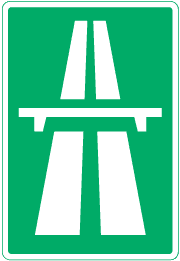
The sign E 42, Motorway, indicates a stretch of road where the special rules for driving on motorways and on the slip roads to and from them apply, in accordance with sections 44-47 of the Danish Road Traffic Act.
Motorways are roads specially designed and built to allow fast and safe driving with a high traffic capacity. The sign E 42 marks the start of such a stretch of road and informs road users that they must comply with the specific rules that apply to motorway driving.
The special rules for driving on motorways and on the slip roads to and from them include, among others, the following provisions:
- A prohibition on pedestrians, cyclists, mopeds and certain other categories of traffic.
- A prohibition on stopping and parking, unless parking facilities are specifically indicated.
- Rules on speed limits and minimum speeds on the motorway.
- Rules on entering and leaving the motorway correctly by means of the entry and exit ramps.
- Rules on driving in the separate lanes, including overtaking and a prohibition on driving on the hard shoulder except in an emergency.
It is important for road users to be aware of and respect the specific rules for motorway driving, as they are designed to keep traffic on motorways flowing safely and efficiently. The sign E 42 acts as a reminder of these rules and marks the transition to a stretch of road where the motorway provisions apply.
E 43 — Expressway
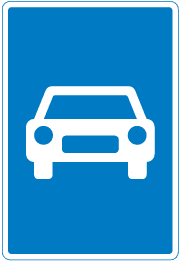
The sign E 43, Expressway, indicates a stretch of road where the special rules for driving on expressways and on the slip roads to and from them apply, in accordance with section 48 of the Danish Road Traffic Act.
Expressways are roads specially designed and built to allow fast and safe driving with a high traffic capacity, though with certain differences and slightly fewer restrictions compared to motorways. The sign E 43 marks the start of such a stretch of road and informs road users that they must comply with the specific rules that apply to driving on an expressway.
The special rules for driving on expressways and on the slip roads to and from them include, among others, the following provisions:
- A prohibition on pedestrians, cyclists, mopeds and certain other categories of traffic.
- A prohibition on stopping and parking, unless parking facilities are specifically indicated.
- Rules on speed limits and minimum speeds on the expressway.
- Rules on entering and leaving the expressway correctly by means of the entry and exit ramps.
- Rules on driving in the separate lanes, including overtaking and a prohibition on driving on the hard shoulder except in an emergency.
It is important for road users to be aware of and respect the specific rules for driving on an expressway, as they are designed to keep traffic on expressways flowing safely and efficiently. The sign E 43 acts as a reminder of these rules and marks the transition to a stretch of road where the expressway provisions apply.
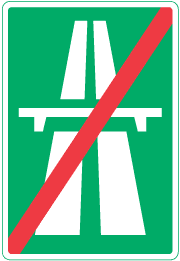
E 44 — End of motorway
The sign E 44, End of motorway, is not normally used at exits where the motorway joins the ordinary road network. This is because it is understood that the motorway ends at the exits and that road users are returning to the ordinary road network.
The sign E 44 is used mainly in special cases where it is necessary to mark clearly that the character of the motorway changes or ends on the motorway stretch itself, without this being connected to an exit. This can be the case, for example, where the road comes to an end, or in an area where the motorway turns into another type of road, such as an expressway or an ordinary main road.
It is important for road users to pay attention to the signage and to any changes in the road conditions where the motorway ends. They should adapt their driving accordingly and follow the rules and provisions in force for the type of road in question.
E 45 — End of expressway
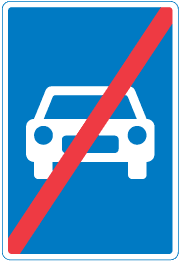
The sign E 45, End of expressway, is not normally used on roads that cross an expressway, or at exits where the expressway joins the ordinary road network.
This is because it is understood that the expressway ends at crossings and exits and that road users are entering the ordinary road network. In these cases there is no need to mark the end of the expressway with a special sign, as road users are already on stretches of road that are not expressways.
The sign E 45 is used mainly in special cases where it is necessary to mark clearly that the character of the expressway changes or ends on the expressway stretch itself, without this being connected to a crossing or an exit. This can be the case, for example, where the road comes to an end, or in an area where the expressway turns into an ordinary main road or another type of road.
It is important for road users to pay attention to the signage and to any changes in the road conditions where the expressway ends. They should adapt their driving accordingly and follow the rules and provisions in force for the type of road in question.
E 49 — Pedestrian street
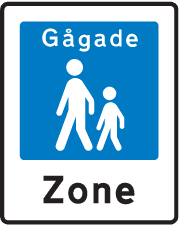
The sign indicates an area where the following special traffic rules apply:
1) The area is reserved for pedestrians.
2) Permission to drive in the area may be granted. In that case, driving must take place in compliance with the provisions of points 4-8.
3) Any permission to drive is stated on a supplementary panel as set out in section 16(3), points 2-5. In addition, the supplementary panel "Driving permitted" or other supplementary panels permitting certain categories of traffic may be used. Permission on a supplementary panel can be limited in time, cf. section 9, sign U 3.
4) Driving in the area may only take place at a very low speed (normally below 15 km/h).
5) Drivers must show particular care and consideration towards pedestrians, cf. section 27(3) of the Road Traffic Act.
6) Where there are people on the road who could come dangerously close to the vehicle as it passes, driving may not continue until the driver has made sure that those people are aware of the vehicle and have made room for it to pass. Such people must not, however, unnecessarily prevent drivers from getting through.
7) Parking in a pedestrian street may not take place outside specially marked spaces. This does not, however, apply to bicycles, mopeds and two-wheeled motorcycles.
8) Drivers have an unconditional duty to give way when leaving a pedestrian street, cf. section 26(3) of the Road Traffic Act.
The sign can be used with the supplementary panels U 1, U 2 or U 6 for advance warning.
E 51 — Residential and play area
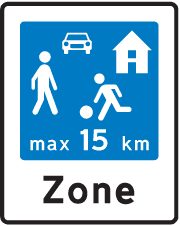
The sign E 49, Pedestrian street, indicates an area where special traffic rules apply on the following points:
- The area is only permitted for pedestrians. Driving is not permitted unless permission is granted, which is stated on supplementary panels.
- Permission to drive can be granted under certain conditions.
- Permission to drive is stated on a supplementary panel in accordance with the rules of the Road Traffic Act.
- Driving in the area must take place at a very low speed, normally below 15 km/h.
- Drivers must show particular care and consideration towards pedestrians.
- If there are people on the road who could be put in danger as the vehicle passes, the driver must make sure that they are aware of the vehicle and make room for it to pass. Those people must not, however, unnecessarily obstruct the passage.
- Parking in the pedestrian street is only permitted in specially marked spaces. This does not, however, apply to bicycles, mopeds and two-wheeled motorcycles.
- Drivers have an unconditional duty to give way when leaving a pedestrian street.
The sign can be used together with the supplementary panels U 1, U 2 or U 6 to give advance warning of the pedestrian street.
It is important for road users to pay attention to the sign E 49 and to follow the special traffic rules that apply in the pedestrian street. This keeps both pedestrians and any permitted vehicles in the area safe and orderly.
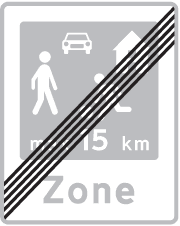
E 52 — End of residential and play area
The sign E 52, End of residential and play area, is used to mark the end of an area where special rules and considerations for spending time and playing apply. When road users pass this sign, they must be aware that they are now leaving the residential and play area and that the ordinary traffic rules and restrictions apply again. This means that road users must follow the general rules on speed, giving way, parking and the other traffic provisions that apply to the road or area in question.
It is important to pay attention to the signage and to respect the changes in the traffic rules that mark the end of the residential and play area. This keeps traffic flowing safely and efficiently and contributes to a harmonious transition between areas with different rules and considerations.
E 53 — Traffic-calmed area
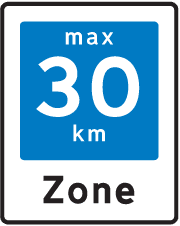
The sign E 53, Traffic-calmed area, is used to indicate an area where the road has been laid out in a way that is not suitable for high speeds. The purpose is to encourage road users to slow down and drive carefully in the area.
The sign marks the start of the traffic-calmed area and states the maximum permitted speed that road users must comply with. This may be a lower speed than the ordinary speed limit for the road.
The sign can be accompanied by the supplementary panels U 1, U 2 or U 6 for advance warning. These supplementary panels are used to warn road users about the traffic-calmed area ahead and to encourage them to pay attention and adjust their driving accordingly.
It is important for road users to observe the speed limits stated in the traffic-calmed area in order to stay safe and avoid potentially dangerous situations. By driving at an appropriate speed and watching out for any traffic-calming measures, road users can help to keep traffic in the area flowing safely and securely.
E 54 — End of traffic-calmed area
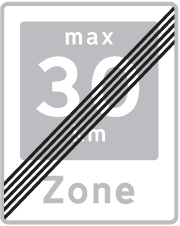
The sign E 54, End of traffic-calmed area, is used to mark the end of an area where the road was laid out with traffic-calming measures. When road users pass this sign, it means that they are now leaving the traffic-calmed area and can go back to following the ordinary speed limits for the road.
The sign marks that any traffic-calming measures no longer apply and that road users can drive at the permitted speed that normally applies on the road. It is important to be aware of the change and to adapt your driving to the speed rules in force once you have passed the sign.
The sign E 54 also marks the end of any other special measures that were in place in the traffic-calmed area. This can include physical speed bumps, chicanes, narrower carriageways or other measures designed to reduce speed.
When road users pass the E 54 sign, they must return to ordinary driving and comply with the speed limits and the other traffic rules that apply on that stretch of road. It is important to adapt to the changed conditions and to keep driving safely once you have passed the sign.
E 55 — Built-up area
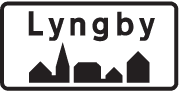
The sign E 55, Built-up area, is used to indicate an area where the Road Traffic Act's rules for built-up areas apply. When road users pass this sign, it means that they are now entering an area where special rules and restrictions apply to driving and speed.
The sign can carry the geographical name of the town in Danish and also in English or in the official language of a neighbouring country. This helps road users identify the specific area they are now in and which rules apply.
The sign can also be produced as a supplementary panel and placed together with the sign C 56, End of local speed limit. This indicates that the special speed limit applying in the built-up area ends and that road users must return to the ordinary speed limits for the road.
It is important for road users to pay attention to the sign E 55 and to adapt their driving to the rules in force for built-up areas. This can include lower speed limits, special precautions for pedestrians and cyclists, and greater attention and consideration towards other road users.
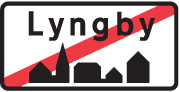
E 56 — End of built-up area
The sign E 56, End of built-up area, is used to indicate that you are leaving an area where the Road Traffic Act's rules for built-up areas apply. When road users pass this sign, it means that they are now outside the specific area where special rules and restrictions apply to driving and speed.
The sign can carry the geographical name of the area in Danish and also in English or in the official language of a neighbouring country. This helps road users identify the specific area they are leaving and be aware that they must now follow the ordinary traffic rules that apply outside the built-up area.
It is important for road users to pay attention to the sign E 56 and to adapt their driving to the ordinary traffic rules that apply outside the built-up area. This can include changes in speed limits, in signage and in the general driving provisions, depending on the specific road and the traffic conditions.
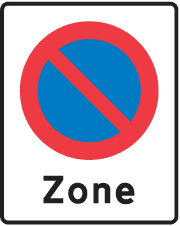
E 68 — Zone sign
The sign E 68, Zone sign, is used to indicate a specific area where the provisions of the signs shown as symbols apply. The sign can also be used to state the provisions for parking in the area (but see E 33 Parking).
The zone sign can state the detailed content of the provisions as well as the distance to the start of the area. This helps road users stay aware of the specific rules and restrictions that apply inside the zone sign area.
The provisions stated on the zone sign remain in force until they are lifted by sign E 69 or replaced by statements about the same matter on another zone sign. Within the area there may be local markings where the provisions of the zone sign are departed from or adjusted.
It is important for road users to pay attention to zone signs and to respect the provisions and rules stated for the area in question. These can include speed limits, prohibitions on certain categories of traffic, or special parking rules.
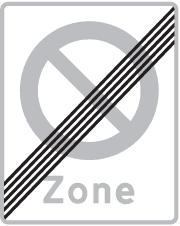
E 69 — End of zone
The sign E 69, End of zone, is used to mark the end of an area where special provisions and rules apply. When road users pass this sign, it means that they are leaving the area where they previously had to follow the specific rules and restrictions stated by a zone sign or another relevant sign.
The sign E 69 therefore marks the end of the zone and indicates that road users are now returning to the ordinary traffic rules and conditions that apply outside the special zone sign area. This can mean, for example, changes in speed limits, in the categories of traffic permitted, in parking rules or in other local provisions.
It is important for road users to pay attention to end signs such as E 69 and to adapt their driving and behaviour to the general traffic rules that apply outside the zone.
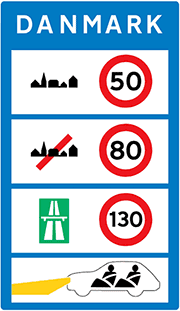
E 80 — General speed limits
The sign E 80, "General speed limits", states the general speed limits that apply on the road network in the country. This sign is normally placed at the country's borders or at the entrance to a major road network and shows the speed limits that apply to different vehicles on the roads in question.
Note that the specific speed limits can vary depending on the category of road, the type of vehicle and local conditions. The general speed limits are normally laid down in the Road Traffic Act or in the road traffic rules of the country in question.
For precise information about the general speed limits in a particular country, you are advised to consult the national traffic legislation or the official road authorities in that country. These sources will give you detailed information about the speed limits in force on the road network.